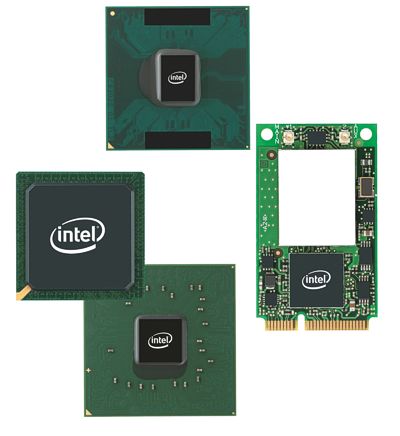
Intel Centrino 2 processor technology products for laptops, powered by five new Intel Core 2 Duo processors. The company says it plans to bring out 250 innovative consumer and business notebook PC designs, including those equipped with the right combination of powerful processors, graphics and battery life to enjoy viewing stunning high definition videos and myriad other computer and Internet activities. Intel has also introduced the the high - performing dual-core mobile processor, the Intel Core 2 Extreme processor.
The Intel India Development Centre (IIDC) in Bangalore played a key role in the launch of the Centrino 2 technology mobile platforms for both consumer and business computing. The team at IIDC was responsible for the planning, design and deployment of multiple variants of the customer reference board to customers worldwide as well as for developing board design guidelines, customer platform electrical, thermal and battery life analysis and enabling high quality customer platforms at launch.
Switchable graphics, a new optional power-saving feature available on Intel Centrino 2-based notebooks, provides both integrated and discrete graphics on a single notebook, enabling users to easily switch between the two options. Switchable graphics delivers greater 3-D performance when needed while providing the option for greater power savings for the best of both worlds.
For consumers, Intel Centrino 2 processor technology delivers the horsepower and battery life to enjoy a typical full-length,high-definition video on a single battery charge for the first time, plus the ability to play a variety of online games, download music or post videos faster than before.
For businesses, Intel Centrino 2 with vPro technology offers enhanced manageability and security options. This is increasingly important as companies replace desktops with notebooks and need to remotely diagnose, update and repair systems over a wireless network. Improved manageability with AMT 4.0 has also been added that provides wireless manageability during system sleep states, ongoing remote configuration capabilities, support for next-generation management standards (WS-MAN and Dash 1.0) and the ability for an employee to initiate communications to IT from outside a company's firewall.